
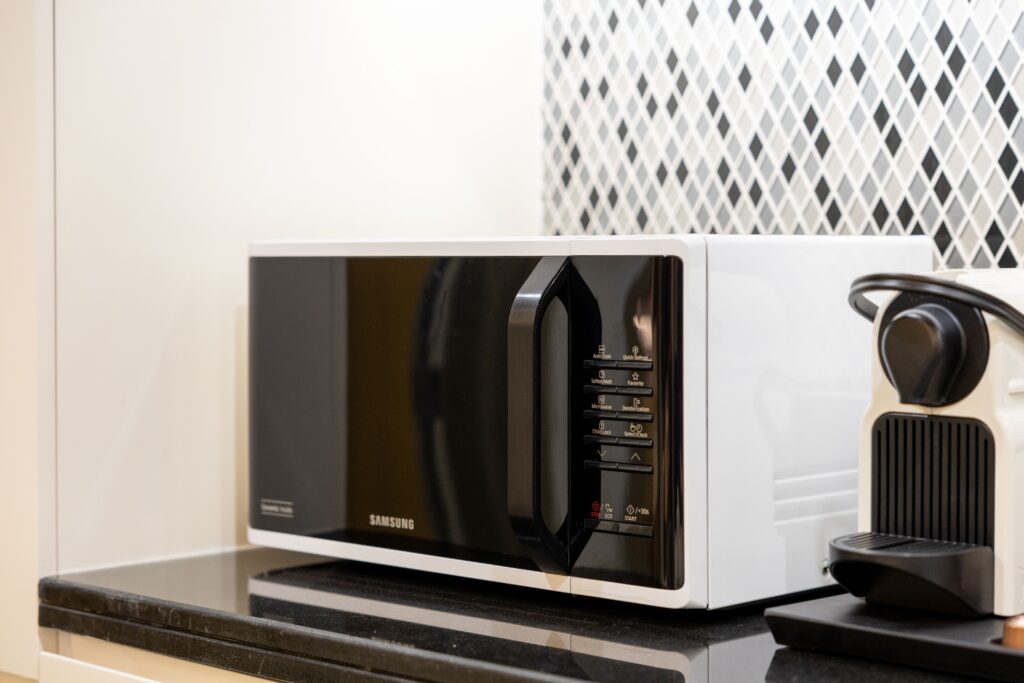
Whether you’re selling a used microwave, sending one to a family member, or moving to a new home, shipping a microwave oven requires careful preparation. Although microwaves are relatively compact compared with large household appliances, they contain fragile components that can be damaged by rough handling during transit.
The glass turntable is particularly vulnerable to breakage, while the door, handle, control panel, and internal components need protection against impact.
The safest approach is to remove and separately protect detachable parts, wrap the microwave securely, and place it in a sturdy box with enough cushioning to prevent movement.
Here is how to pack and ship a microwave oven properly.
1. Prepare the Microwave for Packing
Before packing, make sure the microwave is completely unplugged and has cooled down. Remove any food residue and clean the interior and exterior. Allow the appliance to dry completely.
Next, remove all detachable components, including:
- Glass turntable plate
- Turntable support ring or roller guide
- Removable racks, trays, or accessories
- Any other loose components supplied with the appliance
Do not ship the glass turntable inside the microwave. It can move around and break during transit.
Keep the microwave’s instruction manual and accessories together if they are being sent to the recipient.
Important: Do not open the microwave’s outer casing or attempt to remove internal electrical components. Leave repairs and internal servicing to qualified technicians.
2. Wrap the Glass Turntable Separately
The glass turntable is one of the most fragile parts of a microwave.
Wrap it in several layers of bubble wrap or other suitable protective cushioning. Pay particular attention to the edges, which are vulnerable to chipping and impact.
Place the wrapped turntable inside a snug, appropriately sized box. Fill any empty spaces with cushioning material so that the glass cannot shift.
If the turntable support ring is being shipped as well, wrap it separately to prevent it from scratching or striking the glass.
Label the smaller package so that you can easily identify its contents when packing the larger shipment.
3. Protect the Microwave Door and Control Panel
The microwave door and control panel can be damaged if the appliance is struck or subjected to pressure during transportation.
Close the door gently and protect its front surface with a layer of bubble wrap or foam padding. Add extra cushioning around the corners and edges.
Protect the control panel and handle with suitable padding. Avoid placing adhesive tape directly on the appliance’s finish, buttons, or display.
Do not place heavy objects on top of the microwave or use the door as a surface to support other packages.
4. Wrap the Microwave Oven
Place the microwave in a protective plastic bag to keep out dust and moisture during transit.
Wrap the entire appliance in several layers of bubble wrap or foam padding. Make sure the corners, sides, top, and bottom are adequately protected.
Use additional cushioning around protruding parts, such as the handle and feet.
The goal is to create a protective layer around the appliance that absorbs shocks and prevents direct contact with the shipping box.
5. Choose the Right Shipping Box
The original manufacturer’s box is usually the best option if it is still in good condition and its original foam inserts are available. These inserts are designed to hold the microwave in place and protect its vulnerable areas.
If the original packaging is unavailable, choose a new, sturdy, double-wall corrugated cardboard box that is large enough to accommodate the microwave and protective cushioning on every side.
Avoid using a box that is too small, since it may not leave enough room for adequate protection. An oversized box is also undesirable because the appliance may shift inside unless the empty spaces are properly filled.
For a heavier microwave, check the box’s weight rating before using it.
6. Cushion the Microwave Inside the Box
Place a generous layer of cushioning material at the bottom of the box before positioning the wrapped microwave inside.
Use foam inserts, molded foam, corrugated cushioning, or other suitable packing materials to absorb impact.
Add cushioning around all six sides of the appliance:
- Bottom
- Top
- Front
- Back
- Left side
- Right side
Fill empty spaces so that the microwave cannot move when the box is gently tilted.
Do not rely on loose packing peanuts alone to support a heavy appliance. The microwave needs stable cushioning that will not easily compress or shift during handling.
If the microwave is particularly fragile or valuable, consider using a double-box method. Place the protected microwave in an inner box, cushion that box, and then place it inside a larger, sturdy outer box with additional cushioning between the two containers.
7. Pack the Accessories
Pack the glass turntable, support ring, power cord, instruction manual, and other accessories separately.
Do not leave loose accessories inside the microwave cavity. They can move around and damage the interior during transit.
Place smaller components in individual bags or protective packaging. Secure them in the shipping box so that they cannot strike the microwave or its glass components.
If possible, use a separate, clearly identified compartment or small inner box for these items.
8. Seal and Label the Shipping Box
Once everything is securely packed, close the box and seal all seams with strong shipping tape.
Use the H-taping method: apply tape along the center seam where the flaps meet, then seal both edge seams. Repeat on the bottom of the box if it has not already been sealed.
Attach the shipping label to a flat surface where it can be easily read. Remove or cover any old shipping labels and barcodes if you are reusing a box.
You may add a FRAGILE label to alert handlers, but remember that this does not replace proper internal cushioning or guarantee special handling.
9. Choose an Appropriate Shipping Service
Microwaves can be heavy and bulky, so compare shipping options before purchasing a label.
For a smaller, lightweight microwave, a parcel carrier may be suitable if the packed dimensions and weight fall within its service limits.
For a larger or heavier model, compare freight services or specialized appliance shipping providers. These may be more practical when the package is too large or heavy for ordinary parcel services.
When comparing rates, consider:
- Actual package weight
- Outside dimensions of the packed box
- Dimensional weight, if applicable
- Shipping distance
- Delivery speed
- Insurance or declared-value coverage
- Additional handling or oversize charges
Measure and weigh the completely packed box, not just the microwave itself. The packaging adds to both its weight and dimensions.
For a valuable appliance, review the carrier’s coverage terms and packaging requirements before shipping. Do not assume that a fragile label or declared value automatically guarantees reimbursement for damage.
Final Tips for Shipping a Microwave
Before handing the package to the carrier, check the following:
- The microwave is unplugged, clean, and completely dry.
- The glass turntable and other removable components are separately protected.
- The door, handle, and control panel are cushioned.
- The appliance is wrapped and protected on all six sides.
- The box is strong enough to support the packed weight.
- There is no movement inside the box.
- The shipping box is securely sealed and properly labeled.
- The package has been measured and weighed accurately.
Proper preparation and packaging can significantly reduce the risk of damage and help ensure that the microwave arrives at its destination in good condition.
Frequently Asked Questions
Can you ship a microwave oven?
Yes. A microwave can generally be shipped through a parcel carrier or freight provider, depending on its size, weight, destination, and the carrier’s service restrictions. Check the carrier’s requirements before preparing the shipment.
Can I ship a microwave in its original box?
Yes, provided the original box and its protective inserts are still in good condition. The manufacturer’s packaging is designed for the appliance, but inspect it for damage and reinforce it if necessary.
Should I remove the glass turntable before shipping?
Yes. Remove the glass turntable and wrap it separately. Leaving it inside the microwave creates a risk of breakage during transit.
How do I protect the microwave door during shipping?
Close the door gently and protect its surface, handle, and edges with bubble wrap or foam padding. Avoid placing pressure or heavy objects on the door.
Can I ship a microwave without its original packaging?
Yes. Use a sturdy double-wall cardboard box and enough protective cushioning to prevent the appliance from moving. A double-box method may provide additional protection for a fragile or valuable microwave.
How much does it cost to ship a microwave?
The cost depends on the microwave’s packed weight and dimensions, the shipping distance, delivery speed, and the carrier selected. Compare parcel and freight quotes using the measurements of the fully packed box.