

Properly sealing a cardboard box is one of the simplest ways to protect a package during shipping. Even a well-packed box can open during transportation if its flaps aren’t secured correctly.
One of the most widely recommended techniques for sealing shipping boxes is the H-taping method. This technique uses packing tape to secure the center seam and the two side seams of a box, forming an H-shaped pattern.
It’s easy to learn, requires only a few supplies, and works well for everyday packages sent through USPS, UPS, or FedEx.
Here’s how to use the H-taping method to seal your shipping boxes securely.
What Is the H-Taping Method?
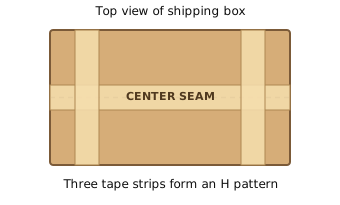
The H-taping method is a box-sealing technique in which packing tape is applied across three seams on the top or bottom of a cardboard box.
The tape forms a pattern resembling the letter H:
- One strip seals the center seam where the two major flaps meet.
- Two additional strips seal the seams along the outer edges of those flaps.
When applied to both the top and bottom of a box, the method typically uses six strips of tape.
The technique helps prevent box flaps from opening during handling, stacking, and transportation.
Why Use the H-Taping Method?
Cardboard shipping boxes are exposed to movement, vibration, pressure, and repeated handling during transit.
A single strip of tape across the center seam may not provide enough protection, particularly for heavier packages.
The H-taping method offers several advantages:
- Stronger closure: Secures the center and edge seams instead of relying on one strip of tape.
- Better protection: Helps keep the box flaps closed during handling.
- Simple application: Requires no special equipment beyond suitable packing tape.
- Versatility: Works with many standard corrugated cardboard shipping boxes.
- Extra security: Helps reinforce the box’s closure when used with appropriate packaging materials.
Although H-taping improves the closure, it cannot compensate for a damaged box, insufficient cushioning, or packaging that is too weak for its contents.
What You’ll Need
Before sealing your shipping box, gather the following supplies:
- A sturdy corrugated cardboard shipping box
- Pressure-sensitive packing tape suitable for shipping
- A tape dispenser or scissors
- Appropriate cushioning materials for the contents
For many ordinary shipments, good-quality packing tape approximately 2 inches wide is suitable. Heavier packages may require stronger or wider tape, depending on the box and carrier requirements.
Avoid ordinary office tape, masking tape, and household duct tape. These may not provide the reliable adhesion needed for shipping.
How to Seal a Box Using the H-Taping Method
Follow these steps to seal a standard cardboard shipping box.
Step 1: Prepare the Shipping Box
Start with a sturdy cardboard box in good condition.
Inspect the box for tears, crushed corners, moisture damage, or weakened seams. If the box is damaged, replace it before packing.
Place the items inside and fill empty spaces with suitable cushioning material. The contents should fit securely without placing excessive pressure on the box.
Step 2: Close the Box Flaps
Fold the smaller inner flaps inward first, followed by the two larger outer flaps.
Make sure the outer flaps meet neatly along the center seam.
Do not force the flaps closed if the box is overfilled. Excessive pressure can weaken the cardboard and cause the tape to peel away.
Step 3: Tape the Center Seam
Apply a strip of packing tape along the center seam where the two larger flaps meet.
Extend the tape beyond the ends of the seam and down the adjacent sides of the box to help anchor it securely.
Press the tape firmly against the cardboard to ensure good adhesion.
Step 4: Tape the Two Edge Seams
Apply a second strip of tape along one outer edge seam where the large flap meets the side of the box.
Repeat on the opposite edge seam.
As with the center strip, extend the tape beyond the seam ends and press it firmly into place.
When viewed from above, the three strips should form an H-shaped pattern.
Step 5: Repeat on the Bottom of the Box
Turn the box over carefully and inspect its bottom closure.
If the bottom has not already been sealed using the H-taping method, apply the same three-strip pattern.
For a standard box sealed on both the top and bottom, you’ll typically use six strips of tape in total.
Step 6: Check the Finished Package
Inspect the box to make sure all six seams are properly sealed.
Look for loose tape, gaps, or flaps that are lifting away from the cardboard.
Press down any tape edges that are not firmly attached.
Your package is now ready for labeling and shipment.
H-Taping Method vs. a Single Strip of Tape
The main difference is the number of seams secured.
A single strip of tape covers only the center seam. Although this may be adequate for certain lightweight packages, it leaves the outer flap seams less securely closed.
The H-taping method covers the center seam and both outer edge seams, providing a more complete closure.
For everyday shipping, especially when sending fragile or moderately heavy items, H-taping is a practical way to reduce the chance of the box opening.
What Type of Tape Is Best for Shipping Boxes?
Choose pressure-sensitive packing tape designed for sealing corrugated cardboard boxes.
Common options include polypropylene packing tape and other shipping-grade carton-sealing tapes.
When selecting tape, consider:
- Adhesive strength: The tape should bond securely to cardboard.
- Width: Approximately 2-inch-wide tape is common for ordinary packages.
- Package weight: Heavier shipments may require stronger tape.
- Temperature: Packages exposed to extreme temperatures may need tape designed for those conditions.
Clear and brown packing tapes can both work well, provided they are designed for shipping and have suitable adhesive strength.
For particularly heavy packages, follow the carrier’s packaging recommendations and the box manufacturer’s weight limits.
Common Box-Sealing Mistakes to Avoid
Even with the H-taping method, certain mistakes can compromise your package.
Using Too Little Tape
Applying tape only to the center seam may leave the edge seams vulnerable to opening.
For a more secure closure, tape all three seams on both the top and bottom of the box.
Using the Wrong Tape
Ordinary household tapes may peel away or fail during transit.
Use tape specifically designed for sealing shipping cartons.
Reusing a Weak or Damaged Box
Tape cannot restore the original strength of crushed or moisture-damaged cardboard.
Use a new or structurally sound box when shipping valuable, heavy, or fragile items.
Overpacking the Box
An overfilled box places pressure on the flaps and tape.
Choose a box large enough for the contents and protective cushioning without forcing the flaps closed.
Failing to Press Down the Tape
Tape that isn’t firmly pressed onto the cardboard may not adhere properly.
Smooth each strip down, particularly along the edges and where the tape wraps around the sides.
Frequently Asked Questions
What does H-taping mean?
H-taping is a method of sealing a cardboard box using three strips of tape on each end. One strip covers the center seam, while two others cover the outer edge seams, forming an H-shaped pattern.
How many strips of tape do you need for H-taping?
For a standard cardboard shipping box, the method typically uses three strips on top and three on the bottom, for a total of six strips.
Do you need to H-tape both sides of a box?
For a secure closure, it’s generally recommended to seal both the top and bottom using the H-taping method. This helps prevent either end from opening during transit.
Can I use duct tape to seal a shipping box?
Duct tape is not recommended for ordinary shipping cartons. Use proper packing tape designed to adhere to corrugated cardboard instead.
Is H-taping required by USPS, UPS, or FedEx?
Carrier packaging rules vary. The H-taping method is widely recommended, but it should not be described as a universal requirement for every package sent through USPS, UPS, or FedEx. Always check the carrier’s current packaging instructions, particularly for heavy or unusual shipments.
Does H-taping make a box waterproof?
No. Packing tape can help cover seams, but it does not make a cardboard box waterproof. If the contents are sensitive to moisture, use appropriate internal moisture protection.
Final Tips
The H-taping method is a simple, effective way to seal a cardboard shipping box.
By securing the center seam and both edge seams on the top and bottom, you can reduce the risk of the box opening during transportation.
For the best results, combine proper H-taping with a sturdy box, suitable cushioning, and high-quality packing tape. Good packaging starts with protecting the contents and finishes with a secure seal.